
Ultimate YOLO
Creativity as the true path to living your life fully

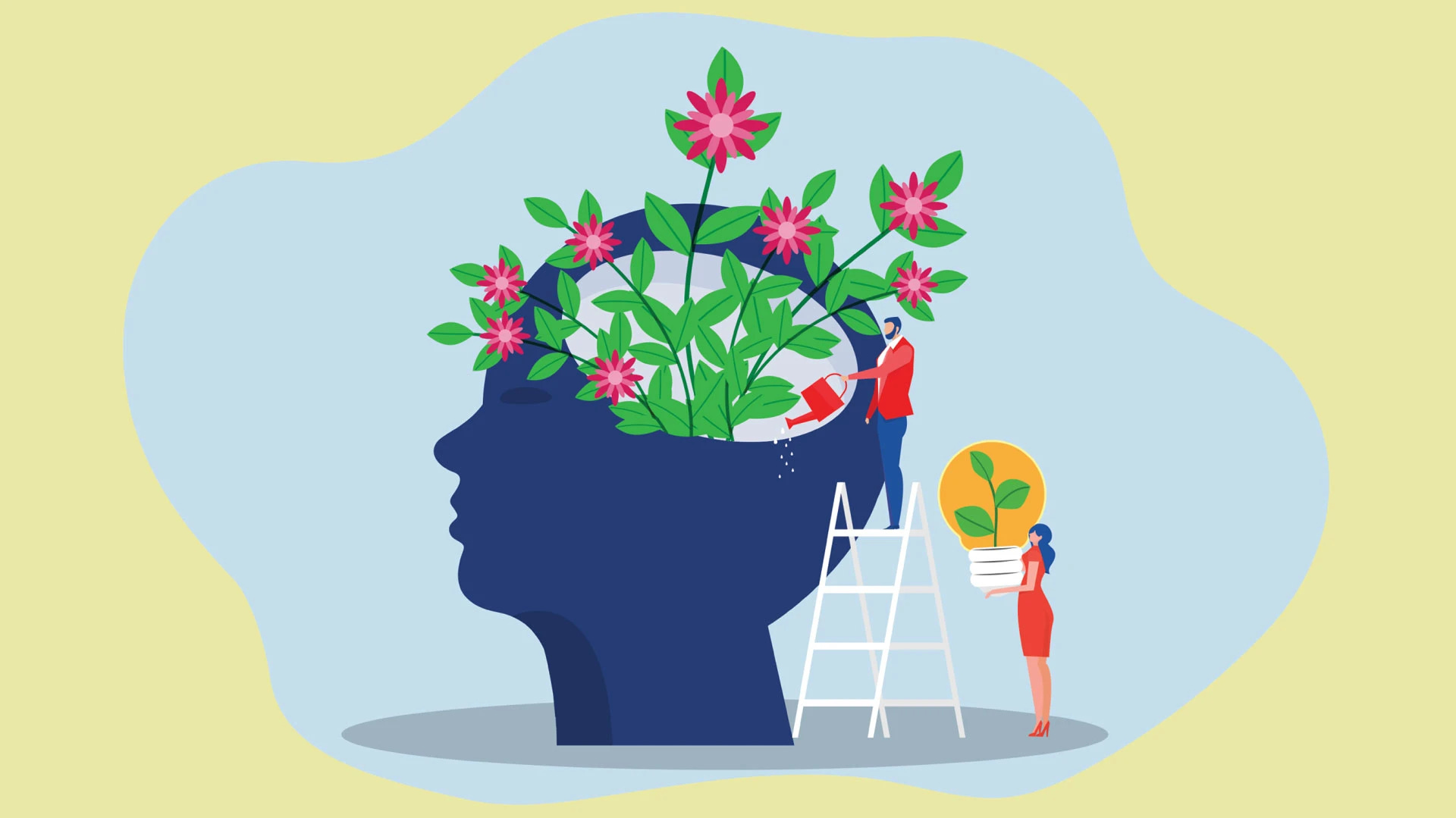
I’ve written essays on my Substack about creativity before. I’ve also written about how AI will kill creativity. Many of them relate to specific artistic creations — I’ve written five essays that are entirely or mostly about Hamlet! I’ve written about how to understand the products of human creativity, and why it matters to understand it. You can see that art is something of an obsession for me. In this essay, I’d like to get underneath all that to look at the relationship between art, which for me is synonymous with human creation, and simply being human. And then, to relate what I find there to the societal mess we appear to be in.
My last essay before this one was about how to see Hamlet (and King Lear) through the lens of Kierkegaardian psychology. With it, I found a new perspective on these plays (and, to be sure, many other works of art) and opened my mind to beauty and meaning in them I hadn’t been aware of before. The first third of that previous essay gave a very short introduction to K-psych (as I’ll call it), which I won’t repeat here, except to explain the poles of the human psyche he established that enabled that new perspective. He called these poles necessity and possibility. Necessity is everything that makes us animalistic: Our bodies, our need to eat, to excrete waste, to reproduce, being ill, and dying. It’s not hard to see why he labeled this pole necessity; they’re all the things we have little to no control over. Possibility, on the other hand (or pole!) is everything else, primarily our imagination, which lives in an infinite space. It’s what separates us from other animals (setting aside any quibbles about a small set of animals like whales, chimps, elephants, etc.); it’s what makes us most human.
The foundation stone of K-psych is our awareness of death. (As far as I know, Mr. K was the first to read the Fall of Man story of Genesis as an allegory about when humans first became conscious of our mortality. I’ve written about that earth-shattering moment here and here.) The rest of his psychology is the elucidation of our responses to that primal terror as seen through the lens of necessity and possibility. Possibility allows us to soar through the universe, while necessity is what keeps us grounded so that we don’t go drifting off with no sense of where and what we are. That’s what schizophrenics psychosis is. However, if we retreat too far from possibility, we become mired in necessity with no aliveness, which is what depressive psychosis is. Ernest Becker, in his book, Denial of Death (The Free Press, 1973), expressed our balancing dilemma superbly:
The irony of man’s condition is that the deepest need is to be free of the anxiety of death and annihilation; but it is life itself which awakens it, and so we must shrink from being fully alive.
Kierkegaard saw that we are at our most human and also most fully alive when we are exploring the terrain of possibility. But, as Becker summarizes, most of us shrink from that; we lie to ourselves, repress memories and awareness, rationalize behaviour, tailoring each of our individualized neuroses to shield ourselves from the anxiety and terror of being alive. I won’t go into how Kierkegaard solves this dilemma (very few are able to), but if you’re interested, read Becker’s book or my brief explanation.
If we move away for a moment from the field of psychology, we can see another outcome of framing humanness by these poles: Outward expression of possibility is simply art, the product of human creativity. There is only one other being beside humans that creates from imagination: Gods. And of course, God itself is a human creation. (However ambivalent Voltaire was about the existence of God, he captured something in writing that "If God did not exist, it would be necessary to invent him.”)
There is a particular anxiety even about being a God, especially a monotheistic one, which is to be alone. Thus, I would add one element to Kierkegaard’s psychology about why we shrink from life: The loneliness of being gods. I once sat with this horror to the point where I felt very disturbed and even physically ill. But this is not simply God’s horror; it is our’s, too. There’s no denying it. We are separated from one another in the most definite and profound ways, and while we contrive all sorts of ways to connect, we never fully satisfy the inherent desire for universal wholeness.
I have remarked before that the “Vulcan Mind Meld,” introduced in the original television series Star Trek in the 1960s, is a very great literary invention that addresses this problem of inherent separation. Vulcans possess a faculty for merging their minds with another’s, at least for brief periods of time. The show’s dramatizations of the process portray responses that range from vehemence to tenderness, i.e., the full range of human emotion. Considering that Vulcans suppress their emotions in favor of logic, these portrayals always struck me as highly ironic.
Simply put, isn’t the aim of art really a striving for the Vulcan Mind Meld? It’s true that I write these essays to learn — to flush out and articulate my thoughts more clearly — but I also write them to connect with others. I hope to share parts of my mind with yours. The same is true of my music and poetry. Whatever the intent of the artist, no one can deny that one effect it has on the “receiver” of the art is to share part of the artist’s mind with the latter. And how wonderful that art, not any scientific or engineering marvel, is how we travel through time and space to be with one another. It also exposes and opens up the receiver’s mind to thoughts, ideas, and perspectives that they’d otherwise not have had. I don’t think it’s possible to disentangle these; the sharing of minds is precisely about such connection and transfer of ideas.
So, in a sense, art, which I’ve argued is already the most human of faculties, is also the one that reaches furthest to ameliorate our godlike separateness. I don’t claim that it solves the problem, or even that it comes anywhere close to doing so, only that it is what we have to work with, and that it advances in that direction to some degree or another. I would even argue that the strength of such connections and their universality are the hallmarks of what we mean by good art, about which I’ve written before.
And there’s another reason to promote everyone’s practice of artistic creation: It brings more beauty into the world and into our minds. Now, if I attempt to write a poem, my chances of writing something even halfway decent are enormously greater if I know what a good poem looks like. So I read poetry and benefit directly from that. But there’s another more primary benefit that doesn’t begin externally: Beauty enters our consciousness when we have a thought that springs from our own mind. In Buddhist psychology, we each have six senses, not five: Mind is considered a channel for taking in sense impressions. Thus, our minds — full of possibility — are generators of beauty. Few things can be more important to keep in mind (pun intended).
I’ve written before about developing the habit of thinking. Like muscles, we use it or lose it; our thinking faculty can and does atrophy with disuse. I am exercising it as I write these words. Of course, there is a broad range of thinking abilities out there, but my observation is that most people tend to minimize use of it, not due to any inherent fault of theirs, but societally and culturally we have denigrated and become estranged from the practice. We've been culturally conditioned to think that it's hard or not worthwhile. Or that doing so is nerdy. When I was in high school, the TV show “Happy Days” was very popular. One of the tropes it visited again and again — so often that it wormed its way deeply into the culture — was that of the nerd. Such an inferior person was neither popular nor cool, the most important things to be, while “Fonzi,” the opposite of the nerd, was epitomized. This is merely one way in which the value of thinking and imagination have been degraded, and it’s been on that trajectory ever since.
Before considering the damage this does to our society, I want to focus on the damage it does to individuals, which brings me back to Mr. K’s notion of possibility. In fact, it seems clear that this very exercise of our imagination is precisely what he meant by possibility. And such exercise is itself creativity, which doesn’t necessarily mean writing down every new thought you have; durability is part of the process only if you want it to be. Creativity requires three ingredients: Imagination, intention, and effort. It would be too easy to say that simply lack of effort has taken us down this desultory path; after all, how to make effort when one’s attention span is exceeded by a gnat’s? But I think all three parts have been co-eroding, because as I mentioned earlier, one’s imaginative power is formed and strengthened by use, by doing. And getting started in doing may be assisted by some external stimulation: Reading a book that makes you think about things; seeing a painting or hearing music; walking in nature, etc. In other words, if our imaginations are out of condition, they can be fired and excited by another source of beauty in the world. Once exercised, and eventually habituated, those stimuli become less important to jump-start the entire practice, though I think the vast majority of us with well-developed habits of exploring possibility will continue to seek external stimulation. The best writers are almost always the best readers, for example.
In Buddhism, three of the four so-called nutriments — those inputs that nourish us in one way or another — have to do with the mind. Only one of them is bodily — edible food. The other three are: Sense impressions (what we see, hear, taste, touch, and smell; i.e., the bodily senses), mental volition (our intentions and desires), and consciousness itself. What I’ve been talking about is consciousness, the thoughts swirling around constantly in our minds. Mr. K’s possibility is, I think, a combination of the last three: Consciousness impelled by sense impression and volition. Effort is implicit in these.
I bring up this Buddhist framework because it emphasizes the nutritional quality of our imagination. We have a severely malnourished society at this moment, because most people don’t nourish themselves in this way. Worse, we build defenses and create strategies to keep ourselves from doing so! And, ironically, the consumption of “art” in the modern world plays an important role in this malnourishment.
This seems contradictory to what I said above about being stimulated by art (and nature), so what am I talking about? Also, why the scare quotes around “art”? It’s because most of what we distract ourselves with these days — most movies, songs, novels, and most of all social media — are simply cheap imitations of actual art that are designed to trigger pleasure centers in our brains. There’s little controversy that we are being masterfully manipulated by these bland simulacra, and it will get much worse as AI gathers steam. Meanwhile, we are receiving all this one-way input that has little to no stimulating effect on our imagination. I think it’s no coincidence that this non-nutritional dross has co-arisen with non-nutritional food — junk food. We are consuming junk in all forms. The word slop has now been applied to what AI gives us. We’re becoming the people on the spaceship from Wall-E.
Kierkegaard showd that too little possibility for an individual can lead either to lives that are experienced by that individual as trivial, or at the extreme, lead to psychotic depression. We live in a time when the space of possibility is not being explored by most people nearly enough to maintain good psychic health in those individuals. And when a large fraction of individuals in a society becomes unhealthy in such a way, so does the health of the society deteriorate. This is one way to understand the difficulties we find ourselves in at this time. I repeat here Ernest Becker’s fine summary of the human condition within Kierkegaard’s framework:
The irony of man’s condition is that the deepest need is to be free of the anxiety of death and annihilation; but it is life itself which awakens it, and so we must shrink from being fully alive.
Re-read that sentence again, but in place of “man’s condition”, substitute “society’s condition;” similarly, substitute “society” for “we.” In my lifetime, the threat of nuclear annihilation (which continues unabated) through to the present threats of climate change, other environmental threats, food- and economic insecurity, and other socio-political dangers, our global society (led by the US) has been shrinking further and further away from possibility. One way to be free from the anxiety of annihilation (which I note shares its root with nihilism) is to become, like Hamlet, resigned to our doom, i.e., nihilistic, which is precisely what I fear we have become. What was his tragedy may well become ours. The overwhelming popular cultural obsession with apocalyptic and dystopian films and novels over the past several decades is a clear marker of that spiraling away from possibility toward necessity and nihilism. In movies, it’s usually a “strong man” (or woman) who saves the day, but in reality, the power we give them in hopes of steering us back toward possibility only worsens the problem.
One necessary, though probably insufficient, piece of working out of this problem is encouraging and enabling people to engage more in creativity, at both the individual societal levels. We would all profoundly benefit. Sadly, though consistently with other trends, we’ve gone sharply backward on this, virtually eliminating arts in schools.
So, please — I implore you — find some way to be creative, to use your godlike faculty of imagination. I have spoken to a dear friend a couple of times recently about what his wife will do with her time when she retires soon. I advised doing something creative, but she has no such outlet, and is perhaps intimidated by it. To which I say: Do it anyway! It doesn’t have to be good. It’s a way to nourish yourself and be more human, that’s all. You don’t need to be famous. You don’t even need to connect with others through it — that’s not the primary purpose. It will make you more of a person, rather than a slug who just consumes junk food and “entertainment” that provokes little or nothing in the mind. Also, I’m not talking about practicing some high art form, necessarily. My wife is an avid gardener, and creates a space of beauty and wonder. And she is highly creative in doing it. Needlepoint - yay! Cooking - yay! There are so many ways to create beauty.
And I can’t emphasize enough what a joy it is to create something. I resonate deeply with Paul Simon’s use of the word “satisfying” to describe what it feels like to come up with a bit of a song — or a whole one, for that matter — that you know is good. Don’t worry about others’ standards of “good.” Apply your own. It’s true that years later, when you have developed different, higher standards, you’ll look back on some of what you made back when and feel differently about them. There will also be some creations that you still feel good about, maybe even better than you once did. But mainly, there’s simply a joy in creating. And a bonus is that if you stay with it, your skills and the quality of your creations will improve, and the satisfaction and joy will be greater.
Just another word on that word “satisfying.” In this essay, I’ve referred to Buddhism quite a bit more than usual, and I’ll do so again here. The Buddha began on his spiritual journey because he recognized that people suffer due to dukkha, which translates from the Pali as “generalized dissatisfaction” with life He developed the “Nobel Eightfold Path” as a way to overcome dukkha. None of those eight elements says anything explicitly about creating, but if you look deeply into them, they all do implicitly.
Finally, I come to the title of this essay, Ultimate YOLO: You Only Live Once. (Interestingly, we live during a time when 70% of Americans believe in an afterlife, which provides an explicit pretext for wasting this one.) Mr. K has shown that when we forgo exploring possibility, our experience of life feels small, even trivial. Being creative is really how to live a fuller life. Yes, you could read a great book and sit around thinking about it without creating anything tangible, though I’d argue that you’re still creating those nutritive ideas in your mind. If you believe in YOLO, you must then wish to be as human as possible. That’s the only response to Ultimate YOLO. Explore possibility. Be creative. Be a god. As the wonderful Mary Oliver wrote, "What is it you plan to do with your one wild and precious life?”
P.S. After posting this essay, I came across a quotation from Kurt Vonnegut that I'd seen before but forgot about. It states so simply what I've try to say in a couple thousand words above that I must quote them here:
"Go into the arts. I'm not kidding. The arts are not a way to make a living. They are a very human way of making life more bearable. Practicing an art, no matter how well or badly, is a way to make your soul grow, for heaven's sake. Sing in the shower. Dance to the radio. Tell stories. Write a poem to a friend, even a lousy poem. Do it as well as you possibly can. You will get an enormous reward. You will have created something."